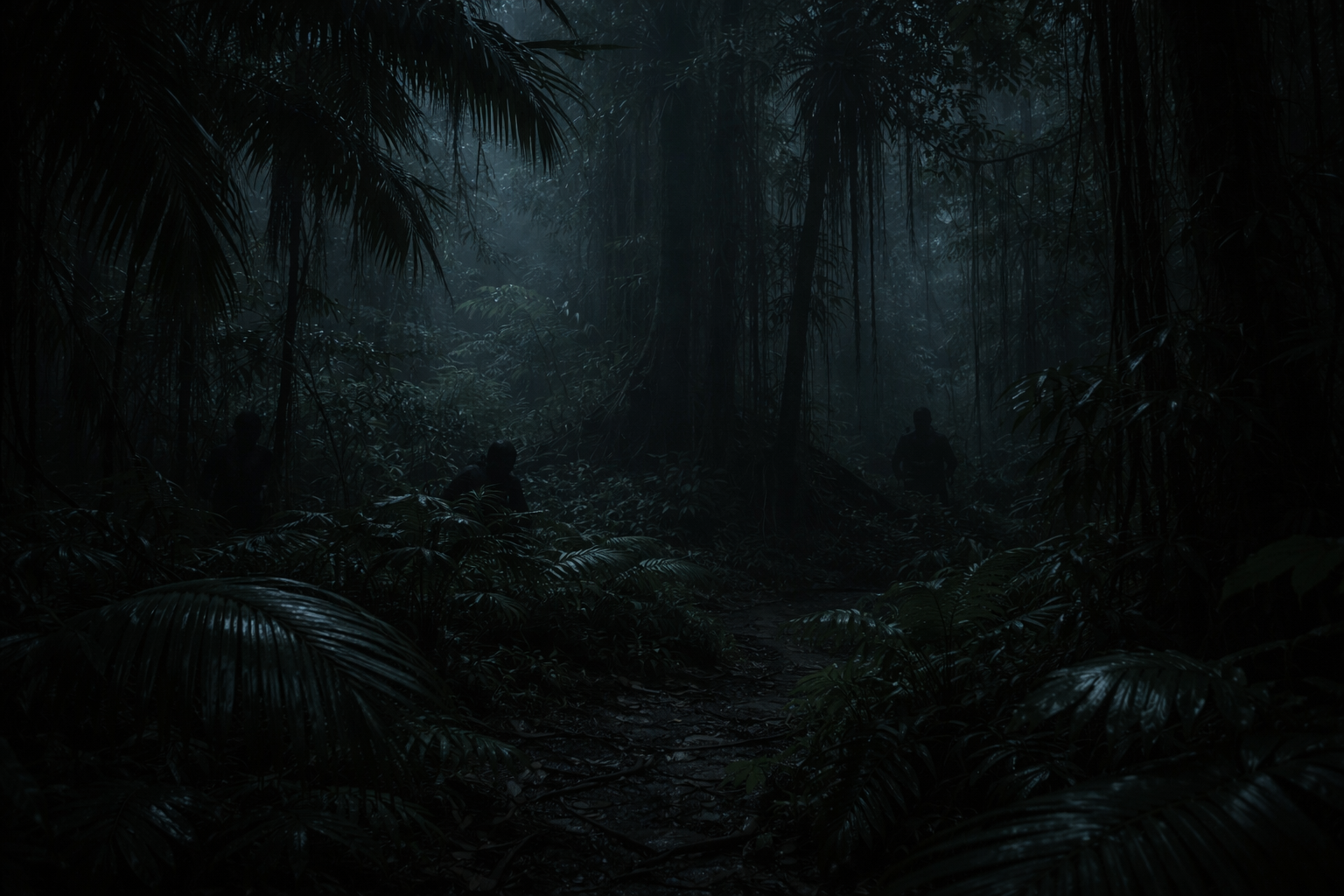
Imagine yourself deep in the Vietnamese jungle as night falls. The air is thick with humidity, and the only sounds are the distant calls of nocturnal creatures. Suddenly, a chilling wail pierces the darkness, followed by a voice that seems to rise from the earth itself. "Friends, I have come back to let you know that I am dead. I am dead." For the Viet Cong soldiers hiding in the undergrowth, this was no hallucination born of exhaustion. It was a calculated assault on their minds, courtesy of the United States military. This operation, known as Wandering Soul, blended cultural folklore with modern technology in a bid to break the enemy's spirit without firing a single shot.
The Roots of Psychological Warfare in Vietnam
To understand Operation Wandering Soul, one must first grasp the broader context of psychological operations (PSYOP) during the Vietnam War. The conflict, which raged from 1955 to 1975, pitted American and South Vietnamese forces against the communist North Vietnamese Army and the insurgent Viet Cong. Traditional warfare proved frustrating for the U.S., as the enemy often melted into the jungle, employing guerrilla tactics that negated superior American firepower. In response, the military turned to non-lethal strategies aimed at eroding morale, encouraging defections, and disrupting cohesion.
PSYOP had proven itself in earlier conflicts. During World War II, Allied forces used propaganda broadcasts to demoralize German troops. By the 1960s, the U.S. had refined these methods considerably, drawing on insights from anthropology and psychology. In Vietnam, the 6th Psychological Operations Battalion, activated in November 1965, became a key player. Their arsenal included leaflets dropped from aircraft urging Viet Cong to defect under the Chieu Hoi program, which promised amnesty and rewards. But Wandering Soul took this a step further, weaponizing something far more intimate: deeply held religious belief.
The Vietnamese worldview, shaped by Buddhism, Taoism, and ancestor worship, placed enormous importance on a "good death." Dying violently, far from home, without proper burial rites, condemned one's soul to eternal wandering as a ma da, a restless, homeless ghost. These spirits were believed to haunt the living, bringing misfortune unless appeased on occasions like Vu Lan, the Day of Wandering Souls. U.S. intelligence reports from 1969 documented various ghost types in Vietnamese folklore, including the "tightening-knot ghost" said to whisper temptations of suicide. American planners recognized an opportunity: turn superstition into a battlefield weapon.
Conceiving the Ghostly Campaign
Operation Wandering Soul emerged in the late 1960s, amid growing frustration with the war's stalemate. The Tet Offensive of 1968 had shaken U.S. confidence, highlighting the need for creative tactics. The 6th PSYOP Battalion, in collaboration with the U.S. Navy and South Vietnamese allies, developed the concept. The goal was straightforward and deeply insidious: simulate the voices of dead Viet Cong soldiers to instill fear, prompt desertions, and, as a secondary benefit, reveal enemy positions through reactive fire.
Preparation involved meticulous cultural research. Engineers in Saigon studios spent weeks crafting the recordings, enlisting South Vietnamese actors and even defected Viet Cong for authenticity. Sounds were layered through echo chambers to achieve an otherworldly quality. One infamous tape, dubbed Ghost Tape Number 10, featured a deceased soldier lamenting his fate, begging his family for forgiveness, crying that his body was gone, urging his living comrades to go home before they shared his end. Other variations featured a child's plaintive cry calling for her father, answered by a ghostly voice admitting he was dead and had come back. Buddhist funeral music, wailing women, and clashing gongs amplified the dread. Some tapes incorporated tiger growls, playing on rumors of predatory animals targeting soldiers in the deep jungle.
What They Would Have Heard
Below is an example of the recordings broadcast into the jungle: eerie compositions of voice, music, and sound designed to convince exhausted soldiers in the dark that the dead were calling out to them.
A ghost tape of the kind broadcast during Operation Wandering Soul.
This is what Viet Cong soldiers hiding in the jungle would have heard.
Deploying the Haunts: Tactics and Technology
Execution was as dramatic as the concept. Operations ran primarily at night, when fatigue and darkness heightened susceptibility to fear. Helicopters, principally the UH-1 Huey rigged with 1,000-watt loudspeakers, hovered over suspected Viet Cong positions, broadcasting the recordings at volumes capable of penetrating tunnels and dense foliage. Ground teams used backpack amplifiers or tree-mounted speakers for closer work, while Navy Swift Boats and Patrol Boats River patrolled waterways equipped with 1,400-watt systems.
A typical mission might involve a Huey from the HAL-3 Seawolves squadron circling a jungle patch, playing the tape on repeat. If fire erupted from below, accompanying gunships, including the AC-47 "Spooky" — would retaliate, the psychological operation doubling as bait. In one variant called "No Doze Chieu Hoi," recordings mixed funeral dirges with a mother and child pleading for a soldier's return, the tape ending with a blunt ultimatum: death or Chieu Hoi. Australian forces adapted similar approaches, using Pilatus Porter aircraft for covert drops over remote areas.
In Their Own Words
Personal accounts bring the missions into vivid focus. Chad Spawr, a PSYOP specialist, recalled planting speakers in trees during jungle patrols: the recordings were considered so potent that their use was heavily restricted, reserved for extreme occasions. Pilot Bill Rutledge noted that the tapes drew fire almost every single time, dangerous for the crews, but valuable for revealing hidden positions. One Seawolf mission ended with an RPG strike that forced an immediate retreat. These stories paint a picture of high-stakes theater, where technology met folklore in the steaming dark.
Measuring Success: Defections, Firefights, and Fears
Was Wandering Soul effective? The answer is genuinely complicated. On the positive side, the operation prompted verifiable defections. On Nui Ba Den Mountain, a combination of soul tapes and tiger roars reportedly scared off 150 Viet Cong fighters. A single Swift Boat broadcast yielded 13 ralliers under the Chieu Hoi program. Interrogations revealed that even soldiers who recognized the recordings as a trick found them difficult to shake; the imagery of eternal wandering cut too close to genuine belief. Rallier numbers spiked markedly in regions like Vinh Long Province following similar operations.
From the Vietnamese side, reactions varied widely. Many Viet Cong fighters fired immediately upon hearing the tapes, exposing their positions while demonstrating a fierce determination not to be broken. North Vietnamese accounts, including Bao Ninh's novel The Sorrow of War, describe jungle landscapes where the sounds of the dead seemed to linger; the eerie notion of a "jungle of screaming souls" was one the tapes consciously exploited. A Viet Cong commander reportedly complained that the audio penetrated underground tunnels, making it nearly impossible to ignore. Yet Ho Chi Minh's fighters ultimately viewed the war as a war of liberation, and ideological conviction proved a powerful armor against superstition.
The drawbacks were significant. Tapes frequently provoked aggressive responses that endangered U.S. forces, with roughly 42 percent of Navy missions drew fire. In some cases, accurate enemy fire targeted the broadcasters directly, suggesting the sounds aided enemy aiming. The Army Concept Team acknowledged that Viet Cong "realized what was going on," though they maintained the operation still produced unquantifiable psychological strain.
Controversies and Unintended Consequences
Wandering Soul was not without its ethical dimensions. Deliberately exploiting religious belief as a weapon raised questions about the limits of psychological warfare and cultural sensitivity in combat. The recordings terrified not only the intended enemy; they unnerved South Vietnamese allies and civilians living near operation zones as well. Raymond Deitch, the 6th PSYOP commander, noted that South Vietnamese troops were "as susceptible as the Viet Cong." Villages near broadcast areas reported haunted fields and nights of sleepless dread. At least one district chief relocated his family because of the unease the operations caused in his community.
Critics within the military were not silent. Lieutenant Colonel William J. Beck dismissed the effort as a "magic show," arguing that when the ruse was inevitably exposed, it did more damage to American credibility than any psychological gain was worth. During the later phases of Vietnamization, as U.S. troops withdrew and South Vietnamese forces assumed more of the fighting, PSYOP effectiveness waned considerably, with North Vietnamese counter-propaganda filling the void.
The Legacy of Wandering Souls
Though Operation Wandering Soul wound down in the early 1970s, its legacy endures in unexpected ways. It has inspired media explorations, from Radiolab's documentary episode to the 2015 short film of the same name. In one of history's more poignant reversals, Australian veterans launched a post-war humanitarian initiative they also named Operation Wandering Souls, this time dedicated to helping Vietnam locate over a million missing war dead and provide the proper burials the original operation had so cynically weaponized. By 2012, they had provided data leading to the identification of thousands of graves, turning an old instrument of psychological harm into a gesture of reconciliation.
The operation ultimately underscores the double-edged nature of psychological warfare: innovative, cost-effective on paper, yet ethically fraught and limited against ideologically committed opponents. It reminds us that wars are fought not only with bullets but with beliefs, and that the human mind can be the most contested terrain of all. In the end, while it never turned the tide, Wandering Soul captured something essential about the surreal desperation of Vietnam: a war so strange and so brutal that ghosts were drafted to serve.
Sources & Further Reading
Psywarrior.com. "The 'Wandering Soul' Tape of Vietnam." ↗
Wikipedia. "Operation Wandering Soul." ↗
War History Online. "Operation Wandering Soul — Ghost Tape No. 10." ↗
The War Zone. "Disembodied Voices and the Ghost Tapes of Vietnam." ↗
HowStuffWorks. "Ghost Tape No. 10 and Operation Wandering Soul." ↗
Bao Ninh. The Sorrow of War. London: Secker & Warburg, 1993.
Army University Press. Records on Vietnamization and PSYOP effectiveness, Vietnam era. ↗
— Vietnam War Diaries Archive —